
The following is a letter in support of the statement from Pacific Church Leaders that was presented on Sunday October 4 by the Fijian Council of Churches and the Pacific Conference of Churches at the official opening service of the pre-COP summit in Fiji.
Dear Prime Minister,
We write to you as senior faith leaders from many different religious traditions across Australia. Though we come from different communities and hold different beliefs, we are united in our conviction that every human being has inherent dignity, that the Earth is a gift entrusted to our care, and that we are called to love our neighbours — especially those who are most vulnerable.
For many years, Australia's faith communities have been privileged to walk alongside our sisters and brothers across the Pacific. As Australians, we are also mindful that this continent has been cared for by Aboriginal and Torres Strait Islander peoples for tens of thousands of years.
We have listened as our neighbours across the Pacific shared both the beauty of their cultures and the realities they are living with: rising seas, coastal erosion, threats to food and water security, damage to livelihoods, displacement, and the loss of places, cultures and ways of life.
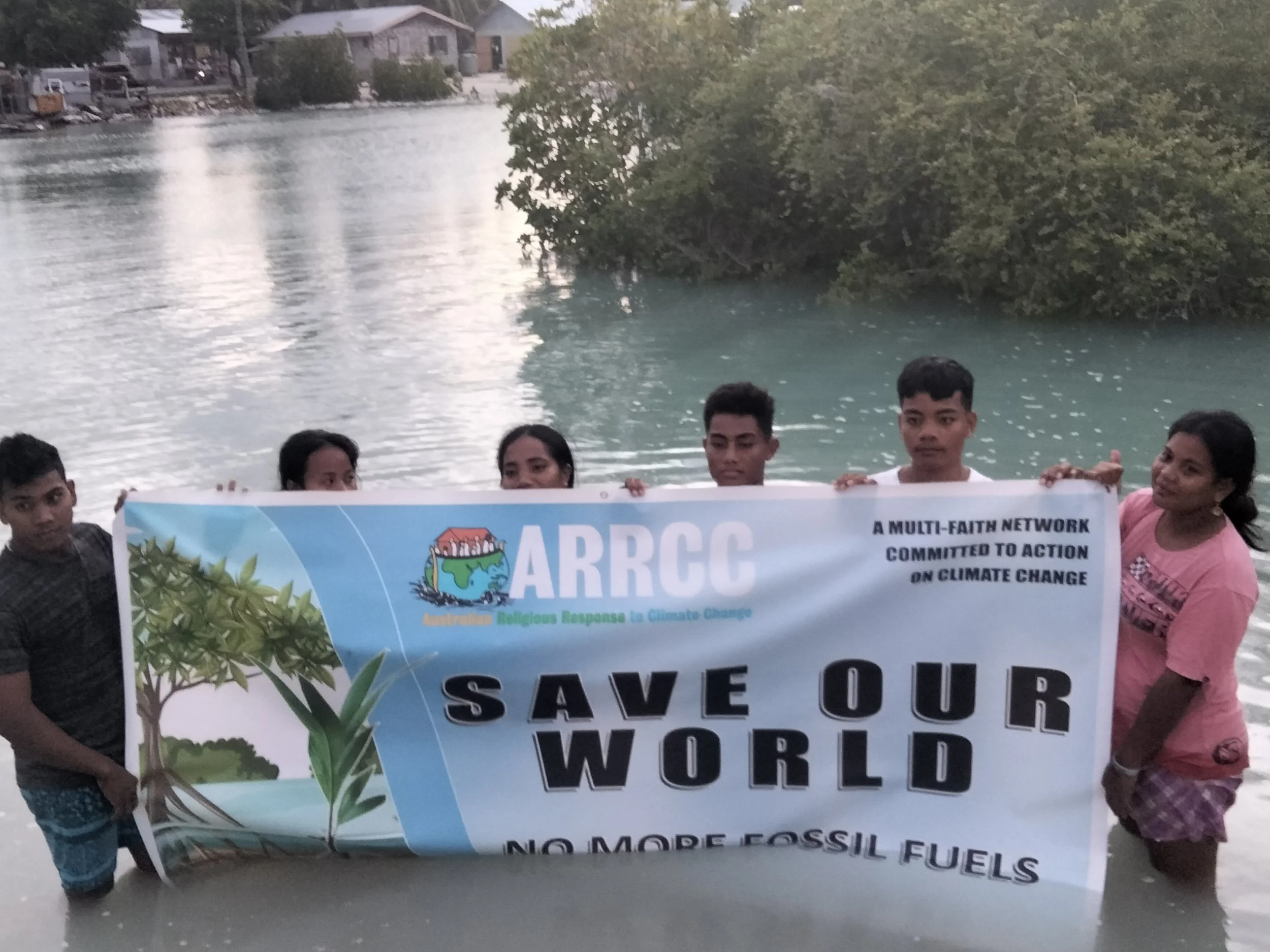
And we are now seeing the changing climate around us. Across the world, people have experienced extraordinary heat, with record-breaking temperatures and increasingly dangerous heat affecting communities, ecosystems and economies. As we brace for another hot summer, Australians are increasingly familiar with the disruption and insecurity brought by extreme heat, bushfires, floods and other climate impacts.
There is a simple reality at the heart of this crisis that we must not lose sight of: coal, oil and gas are the primary cause of the climate change that is driving these impacts. For decades, we have built our economies and our energy systems around fossil fuels. But the consequences of that dependence are becoming increasingly difficult to ignore.
There comes a time when leadership requires us to face reality — to see the world as it is, rather than as we might wish it to be.
We are seeing the consequences of a changing climate around the world and here in Australia. We are seeing the insecurity created by dependence on volatile fossil-fuel markets. And we are hearing from our Pacific neighbours about what these changes mean for their land, their waters, their food, their livelihoods, their cultures and their futures.
The question before us is not whether these realities exist. It is what we choose to do in response to them.
Australia has a particular responsibility in this global challenge. We are one of the world's biggest exporters of coal and gas. The decisions we make about fossil fuels therefore have consequences well beyond our own borders, including for our Pacific neighbours.
At the same time, fossil fuels are not necessarily the source of energy security we have long assumed them to be. International conflicts and disruption have sent oil and gas prices sharply higher, exposing households and economies to forces over which they have little control. Renewable energy offers a different possibility: energy produced from resources that Australia has in abundance, without the same exposure to volatile international fossil-fuel markets. The transition therefore presents an opportunity not only to reduce climate risk, but to build a more secure and resilient energy system.
Pacific governments, churches and civil society leaders have repeatedly called on the world to keep the goal of limiting global warming to 1.5°C within reach, to accelerate the transition away from fossil fuels, and to strengthen climate finance and action on loss and damage.
Our brothers and sisters in the Pacific have made it very clear that the ocean is inseparable from climate, culture, identity, livelihoods and life itself, and that protecting the ocean and the communities who depend upon it is therefore an essential part of climate justice.
Pacific communities have also reminded us that climate security is about much more than traditional notions of security. It is about the security of people, families and communities; their land, water, food, livelihoods, cultures and futures. And it is about the right of Pacific peoples to determine their own futures and to have a meaningful voice in decisions that affect their communities, their lands and their waters.
At the recent Pacific women's climate gathering in Tuvalu, women gave powerful expression to the call of Tuākoi 'Lei — being a good and loving neighbour. It calls us to care for creation, to stand alongside one another, and to turn compassion into action.
This October, as Pacific leaders gather to help shape the international response to climate change ahead of the United Nations Climate Change Conference (COP31), Australia has an extraordinary opportunity to show courageous and compassionate leadership.
Australia is President of Negotiations for COP31. We are therefore not simply participating in the world's climate negotiations; we are helping to shape the conversation about how the world responds to this crisis.
Given that coal, oil and gas are driving climate change, and that keeping 1.5°C within reach requires a rapid reduction in fossil-fuel use, the managed phase-out of fossil fuels needs to be part of that international conversation.
With your leadership, Australia can help bring this difficult but necessary conversation into the open, and help build cooperation around how the transition can be managed fairly and well — looking after lives and livelihoods while grasping the opportunities for prosperity that this transition will bring.
Australia has an opportunity to work with Pacific nations and other countries to bring this conversation to the centre of COP31 — and to help build international cooperation around how a fair and orderly transition can actually be achieved.
We have heard a simple lesson in what it means to be a good neighbour: come near, listen, walk alongside, act and be accountable.
For Australia, that means being present when our Pacific neighbours are asking to be heard, respecting their self-determination and ensuring that their voices help shape the decisions that affect their future. The Pre-COP Leaders' event in Tuvalu and Fiji, together with the Pre-COP meeting in Fiji, provide opportunities for our leaders to listen directly to Pacific voices and to demonstrate through their presence and their actions what it means to be a good neighbour.
Australians know something about climate-related insecurity. We have seen bushfires, floods and heatwaves disrupt homes, communities and livelihoods. But we also recognise that the experience of Pacific communities is not the same as ours. For many Pacific peoples, climate change is already affecting ancestral lands, food and water security, livelihoods, cultural heritage and the possibility of remaining safely on their islands.
This is not only a scientific or economic question. This is a question of justice, responsibility and relationship.
As people of faith, we are guided by traditions that call us again and again to respond to such questions with compassion, justice and love for our neighbours.
For us, this leads to one simple question:
What does it mean to love our neighbours in the Pacific?
We believe that question calls Australia to respond not simply with sympathy, but with leadership.
Australia has been richly blessed. We have extraordinary renewable energy resources, remarkable scientific and engineering expertise, and longstanding friendships throughout the Pacific. We also have much to learn from the wisdom and enduring care for Country shown by Aboriginal and Torres Strait Islander peoples over countless generations.
The voices of Australia's First Peoples remind us that caring for Country is inseparable from justice, relationship, self-determination and responsibility to generations yet to come. First Peoples must be recognised not simply as people affected by climate change, but as knowledge holders, custodians, leaders and decision-making partners.
Leadership means not simply responding to change, but helping to shape it.
We believe Australia should help lead a fair, carefully managed transition away from fossil fuels — one that protects workers, communities and regions, strengthens energy security and gives people confidence about the future.
We therefore respectfully urge the Australian Government to use its leadership role at COP31 to help ensure that the phase-out of fossil fuels is part of the international agenda; to support a fair and planned phase-out of coal, oil and gas, alongside a just transition for workers and communities; to strengthen climate finance and action on loss and damage; and to support the Fossil Fuel Non-Proliferation Treaty as a framework for international cooperation towards these goals.
The Fossil Fuel Non-Proliferation Treaty provides a practical framework for nations to work together to end the expansion of fossil fuels, support a fair and orderly global transition, protect workers and communities, and ensure that countries are not left behind.
No nation can meet this challenge alone. But Australia has an opportunity to use its resources, relationships and international role to help shape a safer, fairer and more peaceful future.
Prime Minister, history will remember how this generation responded to the climate crisis. But it will also remember something deeper. It will remember whether Australia chose to stand alongside our neighbours when they called upon us.
As people of faith, we believe that love is more than a sentiment. Love is expressed through the choices we make, the people we listen to, and the responsibilities we are willing to embrace. It asks us to move from compassion to action, from concern to commitment, and from words to the changes that our neighbours and our common home require of us.
We make this request not in a spirit of criticism, but in hope.
Hope that Australia can be remembered as a nation that responded with courage.
Hope that we can help build a future that is safer, fairer and more peaceful.
And hope that, when our Pacific neighbours asked us to listen, to walk alongside them and to act as good neighbours, we responded with love.
Yours sincerely,
Signatories
Reverend Charissa Suli — President, Uniting Church in Australia Assembly
Imam Shadi Alsuleiman — President, Australian National Imams Council (ANIC)
Archbishop Jeremy Greaves — Archbishop, Anglican Church Southern Queensland
The Most Reverend Vincent Long Van Nguyen OFM Conv — Bishop, Diocese of Parramatta
Shri Sai Paravastu — National President, Hindu Council of Australia
Dr Rateb Jneid — President, Australian Federation of Islamic Councils
Dr Mohamed Mohideen OAM — President, Islamic Council of Victoria
Erica Hendrawan — Chair, Buddhist Council of New South Wales and Federation of Buddhist Councils
The Most Reverend Joseph Caddy — Bishop, Catholic Diocese of Cairns
Charlie Hogg — Director, The Brahma Kumaris, Australia
Ms Anne Walker — National Executive Director, Catholic Religious Australia
Duncan Frewin — Presiding Clerk, Religious Society of Friends (Quakers)
Reverend Raymond Minniecon — Scarred Tree Indigenous Ministries, Glebe
Rev. Ken Sumner — National Co-chairperson, Uniting Aboriginal & Islander Christian Congress
Reverend William Pickett — National UAICC Co-Chairperson, Uniting Aboriginal and Islander Christian Congress
Rev Dr Paul Goh — President-elect, Uniting Church in Australia Assembly
Reverend Faaimata Havea Hiliau — Moderator, Uniting Church Synod NSW & ACT
Reverend Felicity Amery — Moderator, Northern Synod of the Uniting Church in Australia
Reverend Bruce Moore — Moderator, Uniting Church in Australia – Queensland Synod
Reverend Salesi Faupula — Moderator, Uniting Church in Australia
Reverend Peter Morel — Moderator, Uniting Church Synod of South Australia
David Ernest Jackson — Moderator, Uniting Church in Australia Synod of WA
Bishop Philip Huggins — Episcopal Adviser on Peacebuilding, Anglican Diocese of Melbourne
The Right Reverend Peter Stuart — Bishop, Anglican Diocese of Newcastle
The Right Reverend Dr Keith Joseph — Bishop, Anglican Diocese of North Queensland
The Rt Rev Kate Prowd — Bishop, Anglican Church
The Right Reverend Hans Christiansen — Assistant Bishop of Perth, Anglican Diocese of Perth
The Very Revd Dr Andreas Loewe — Dean of St Paul's Cathedral Melbourne, Anglican Diocese of Melbourne
Rabbi Jonathan Keren-Black OAM — Spokesperson on Climate Change, Association of Cantors and Rabbis, Australia and Aotearoa New Zealand
Professor Mehmet Ozalp — Founder, Islamic Sciences and Research Academy
Vani Shukla — President, Hindu Council of Australia, South Australia Chapter
The Right Reverend Dr Murray Harvey — Bishop, Anglican Diocese of Grafton
Dr Sureka Goringe — National Director, UnitingWorld
Jo Knight — Chief Executive Officer, Anglican Overseas Aid
Cheryl Dugan — Director for Asia Pacific and Member Leadership, Laudato Si' Movement
Professor Anne Poelina — Patron, Australian Religious Response to Climate Change; Executive Chair, Martuwarra Fitzroy River Council
Reverend Meredith Williams — President, Australian Religious Response to Climate Change
Pastor Rob Buckingham — Senior Minister, Bayside Church
Professor Ruth Powell
Professor Neil Ormerod
Rev'd Dr Gordon Robert Preece — Director, Ethos: Evangelical Alliance Centre for Christianity & Society
The Reverend Doctor Josephine McDonnell Inkpin — Congregational Leader and University Lecturer, Equal Voices
Reverend Doctor Megan Powell du Toit — Senior Pastor & Podcaster, Baptist Churches of NSW & ACT
Rev Dr Patrick McInerney — Regional Director Oceania, St Columban's Mission
Canon Dr Dianne Rayson — Associate Professor, Theology and Ethics; Academic Dean and Head of School of Theology, James Coleridge Patteson University, Solomon Islands
Dr Armen Gakavian
Reverend Linda Chapman OAM
Dr Matthew Anslow — Lecturer in Systematic Theology
Sister Wendy Hildebrand — Congregational Leader, Loreto Sisters
Sister Josephine Dubiel — Congregational Leader, Sisters of Saint Joseph of the Sacred Heart
Sister Mary Walsh — Social Justice Convenor, Presentation Sisters Wagga Wagga
Sister Elizabeth Morris
Rev. Alimoni Taumoepeau — Team Leader Intercultural Ministry and Climate Action, Uniting Mission and Education
Mrs Ema Vueti — President, Pacific Islands Council of Qld
Subhana Barzaghi — Spiritual Director, senior guiding teacher, Sydney Zen Centre
Roshi Gillian Coote
Venerable Carla Pearse — Tibetan Buddhist
Reverend Head Monk Mujyo Williams — Abbot, Kozanji Rinzai Zen Temple
Reverend Geoff Smith — Lead Minister, Parramatta Community Uniting Church
Reverend Geoff Stevenson — Parramatta Community Uniting Church
Rev. Ken Devereux — Chairperson, Uniting Church, Presbytery of WA
Reverend Hollis Wilson — Minister of the Word, Uniting Church in Australia
The Rev’d Stephen Williams — Dean Emeritus, Christ Church Cathedral Newcastle
Mr Doug Hewitt AM — Leader, Christians for Peace Newcastle
Brother Christopher John SSF — Minister General, Society of St Francis
Sister Karon Donnellan — Institute Leader, Institute of the Sisters of Mercy of Australia and Papua New Guinea
Ms Thea Ormerod — Founding past president, Australian Religious Response to Climate Change
Philippa Rowland — Co-Chair, Religions for Peace Australia / President, Multifaith Association of South Australia
Allen Robert Riebau — Chairman, Local Spiritual Assembly of the Baha'is of Wanneroo; Baha'i Community of Wanneroo
Pastor Samuel Hearn — Pastoral Leader, Jigsaw Baptist Community
Ryan O'Connor — Senior Pastor, Cairns South Baptist Church
Maggie Gluek — Roshi, teacher, Sydney Zen Centre
Jane Andino — Roshi, Teacher, Sydney Zen Centre
Julie Robinson — Board Member, Sydney Zen Centre
Jill Steverson — Sydney Zen Centre
William Moon — Roshi (Zen teacher), Teacher
Ms Anna Markey — Teacher and Founder, Coast and City Sangha
Professor Alistair Noble — President, Nan Tien Institute
Gershon Nimbalker — National Director, Common Grace
Joy Connor — Leader, Wellspring Community of Australia
This open letter was published on the website of ARRCC, Australian Religioius Response to Climate Change